
Out of focus
If every picture tells a story, what does yours say?

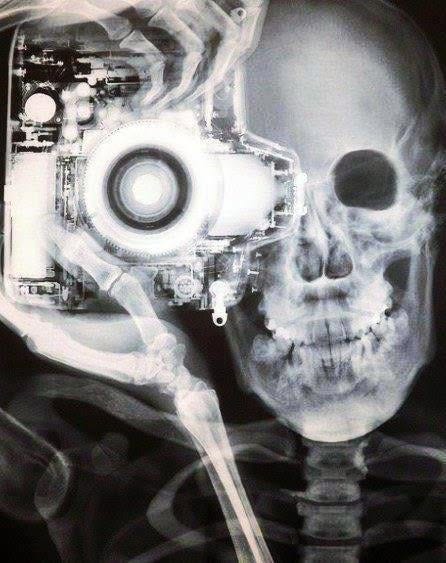
I got a new camera a couple of weeks ago. Actually, it’s pre-owned, and I traded for it — a couple of cameras I had on hand, along with some accessories swapped into a single camera, an upgrade.
It seems like I’ve always had several cameras around, but for decades my primary tool was a Nikon F3 Bettye gave me as a birthday gift, the year my previous Nikon died mid-shoot. Ironically, I was photographing Doug Snellgrove, a brilliant shooter who worked in black & white. Doug was a reluctant subject; “I’m so ugly I’m liable to break your camera.”
I had taken a couple of images when the device ceased to function. It was a hilarious moment when we all realized that the camera was indeed broken. The F3, on the other hand, is virtually indestructible, and would shoot a roll of film in short order if I could find some film, which you really have to look for these days.
There were several cameras around the house when I was growing up, most notably an Argus C3 rangefinder that belonged to my father. His mother had been fascinated with photography, and would always have her Kodak box camera; as a result, we have a wealth of family photos from that side of the family.
When my dad shipped out for military service, MawMaw told him to take lots of pictures. He spent his tour in Europe as a radio operator, and just before he processed out at the end of his enlistment, he bought the Argus and got a buddy to go around on a whirlwind sight-seeing tour to snap pictures to take home to his mother. MawMaw was thrilled, and deftly ignored that my dad and his pal were wearing the same clothes in every shot. She called the stack of scallop-edged black-and-white prints The “Lenny and Me” collection based on my father’s travelogue — “Lenny and me at the Eiffel Tower”; “Lenny and me on the Champs-Élysées”; “Lenny and me at the Moulin Rouge.”
The Argus never got much use after that. Mother had a variety of Kodaks over the years, and that’s where most of our family photos originated. I don’t remember being tempted by any of them. But at one point, I came into the possession of a Polaroid Swinger, and when I could scrape up enough money, I would ride my bike to Eckerd’s and buy a package of black-and-white film, then race home for a photo binge — if you can call 10 pictures a binge. The draw of the Swinger is that it used Polaroid’s instant film. You’d take a photo, and the camera would spit out a thick rectangle. You’d wait a prescribed around of time, and then peel the photograph away from the backing. Voila! — a picture.
I came across a few of those Polaroids recently. They didn’t hold up well. Most are hard to make out. There’s one of a Corvette in the intersection of Main and Oates streets, a couple of our family dog, Poochie, and one I assume to be Daffodil, a neighbor’s dog, because the animal is barking at me. Daffy was always barking at me.
I sold my bicycle, bought a Nikon, and shot a million rolls of film.
When I was in college, I took a photojournalism class. Each of us was assigned a Pentax K-1000 single-lens reflex camera to use during the term. It was a bit more complicated than I was used to. The Swinger required only that you turn a knob until the word YES illuminated, and then you’d press the shutter button. The Pentax had dials and numbers, and we had to learn how different settings controlled light and time, and I wondered if I would ever get a photograph.
Once it all fell into place, I began to enjoy taking photographs. I sold my bicycle, bought a Nikon, and shot a million rolls of film. When I got a job as a newspaper photographer, I shot a million more. Much of the film I used outside of work was color negative film and the occasional Kodachrome, but I loved black-and-white film. Much of my personal black-and-white film was developed by Frank Gaines.
I was dismayed when Frank died. I’d known him most of my life, starting with Boy Scout Troop 109 at Calvary Baptist Church. Years later, when I needed some black-and-white film developed, I would drop it off at his shop. Much of his business was commercial photography, so finding him there was a crapshoot. When he was there, he was always ready to talk about cameras, films, photography in general, or Dothan history. Frank amassed a tremendous collection of photographs of Dothan and the surrounding area, and was the go-to guy for anyone who had a question about the past. Frank would, more often than not, answer a question with an image. And it was always exactly what the inquirer would be looking for.
I’ve thought a lot about Frank in the last few days. His family and friends mourn him, of course. But from the perspective of our area’s pictorial archive, and his encyclopedic knowledge of the history of our area, Frank’s passing left a tremendous void yet to be realized.
It leads me to wonder about how we’ll chronicle images in the future. I still have film equipment, but haven’t used it in years. Film is nearly impossible to find, and developers are scarce. Like most everyone else, I take photographs with my cell phone, and those images are to the Polaroid black-and-whites what a Maserati is to Fred Flintstone’s Yabba-Dabba-Do-mobile. They’re also intangible and ethereal; you won’t find an iPhone photo in a desk drawer in 50 years.
I’m still feeling my way around the digital camera world. They look deceptively simple, but there’s a steep learning curve to be conquered before it becomes an extension of my body as the F3 was for so many years.
I have the “Lenny and Me” Argus C3 somewhere; the Polaroid is lost to time. But it made me remember a barking Daffodil and a $19.95 song — “Meet the Swinger, order a Swinger …”
Enjoying Down the Rabbit Hole? Consider buying me a cup of coffee for brain fuel.
I miss it all. Still have my F3 and I believe the Argus is at my Mom’s. I dug the Nikon D200 out of the closet after seeing the Leica. Glad all is well.
Thanks for sharing, Bill. I enjoy learning about your photographing history.